4-Week Puppy Training Routine: Potty, Commands, Socialize
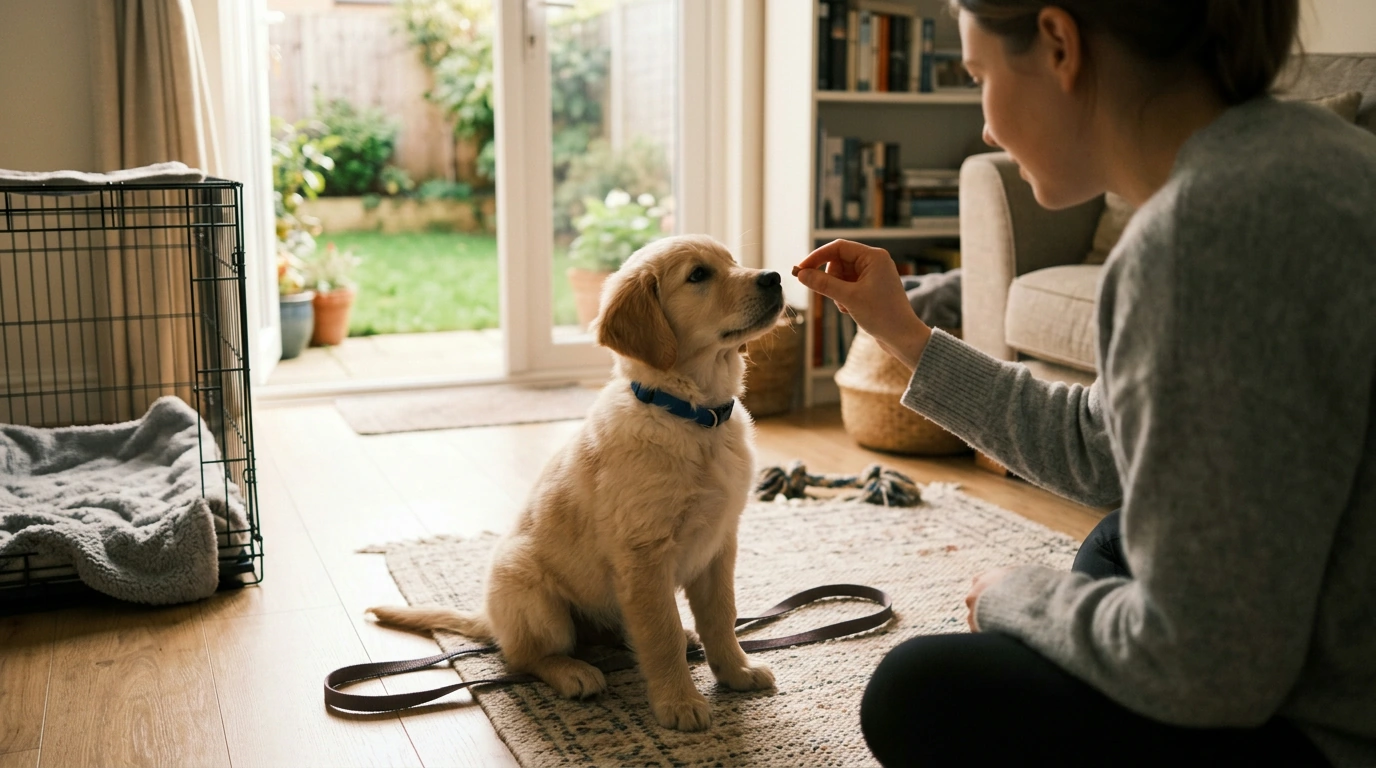
New Puppy Training Starter Guide: A 4-Week Routine for House-Training, Commands, and Confident Socialization
Bringing home a new puppy is exciting—and chaotic. The fastest way to cut down on accidents, nipping, whining, and “what do we do now?” moments is a simple routine everyone can follow. Our team put together this 4-week starter approach so you can turn the first month into calm, teachable days with clear house-training steps, beginner commands, and safe, confidence-building socialization.
The goal is straightforward: your puppy learns what earns rewards, where to potty, and how to settle at home—without you feeling like you’re training all day.
What the first month should accomplish (and what to ignore for now)
In the first four weeks, your biggest wins come from predictability and prevention. Focus on:
- Build predictability: consistent wake-up, potty, meals, naps, play, and short training “micro-sessions.”
- Prevent rehearsing bad habits: management beats correction (crate, pen, leash indoors, gated areas).
- Prioritize three foundations: potty routine, name/attention, and calm handling.
- Keep training short: 1–3 minutes, multiple times per day, ending on an easy win.
- Ignore advanced polish for now: long stays and fancy tricks can wait until focus and routine are steady.
First-week daily rhythm (adjust times to your household)
| Time block | What to do | Why it works | Common mistake to avoid |
|---|---|---|---|
| Wake-up | Straight outside to potty, then calm praise/reward | Prevents first accident and starts the pattern | Letting the puppy wander indoors “just for a minute” |
| After meals | Potty within 5–15 minutes, then a short play break | Meals predict bowel movement timing | Waiting too long or missing signs (circling/sniffing) |
| Every 30–60 minutes when awake | Quick potty trip, then back inside | Frequent reps build the habit faster than cleanup | Staying out too long and turning potty into playtime |
| Training micro-session | Name game, sit, touch, or recall indoors | Builds communication and focus before distractions | Training when puppy is overtired and mouthy |
| Nap/quiet time | Crate/pen with a chew, lights low, minimal fuss | Overtired puppies bite and forget house-training | Keeping puppy up because it seems “full of energy” |
House-training that actually sticks: the simple system
House-training gets easier when you stop relying on guesswork and start running a repeatable system.
- Start with a schedule: take your puppy out after waking, after eating/drinking, after play, and before/after crating.
- Supervision is training: if your eyes aren’t on your puppy, use a crate/pen or tether the leash to your waist.
- Reward outside immediately: deliver the treat within a few seconds of finishing—late rewards blur the lesson.
- Pick one potty spot and one cue: consistency reduces distracted sniffing and speeds success.
- Accidents are information: clean with an enzymatic cleaner and tighten supervision; avoid scolding after the fact.
If you want a step-by-step routine you can print and share with your household, our team built New Puppy Training Starter Guide (printable 4-week routine) to keep the plan consistent day to day.
Beginner commands that make everyday life easier
These cues aren’t about showing off—they’re the ones that prevent chaos in real life.
- Name + attention: say the name once, reward eye contact. This becomes the foundation for every other cue.
- Sit and down: teach with a lure, then fade the lure so your puppy responds to the cue, not the treat in your hand.
- Touch (hand target): turns wiggly moments into a game and helps you guide without grabbing the collar.
- Leave it: start low value with closed-fist practice before using it on walks.
- Drop it: trade up with a better treat or toy; avoid chasing, which teaches keep-away.
When your puppy’s responses feel inconsistent, it’s often temperament and stress signals—not stubbornness. Our team uses Understanding Your Pet’s Temperament as a practical reference for reading what “over-threshold,” “worried,” or “over-tired” looks like so you can adjust the session before it falls apart.
Socialization without overwhelm: confidence first
Socialization is about teaching your puppy that the world is safe and predictable—not about forcing greetings or checking boxes.
For a science-based perspective on early socialization, you can review the American Veterinary Society of Animal Behavior (AVSAB) puppy socialization position statement. For additional practical guidance on training and socialization, the American Kennel Club training resources are also helpful.
Common puppy problems and quick fixes that support training
For house-training fundamentals and cleaning guidance, the Humane Society of the United States house-training resource is a solid reference.
Make the routine easy to follow: tracking and consistency
FAQ
How long does house-training usually take?
Many puppies need several weeks to a few months for reliable house-training, with steady improvement along the way. A consistent schedule, close supervision, and immediate rewards speed it up, while too much freedom, inconsistent routines, and punishment typically slow progress.
Is it safe to socialize a puppy before all vaccines are finished?
In many areas, controlled low-risk socialization is encouraged before the full vaccine series is complete, but your veterinarian’s guidance should lead the plan for your location. Stick to known healthy dogs, clean environments, and calm exposures that don’t put your puppy in high-risk settings.
How many training sessions should a beginner do each day?
A few micro-sessions (about 1–3 minutes each) spread across the day usually work better than one long session. Also “train” in real life by rewarding calm behavior, attention, and sits at doors, and stop before your puppy gets overtired and mouthy.










Leave a comment